
Available Today
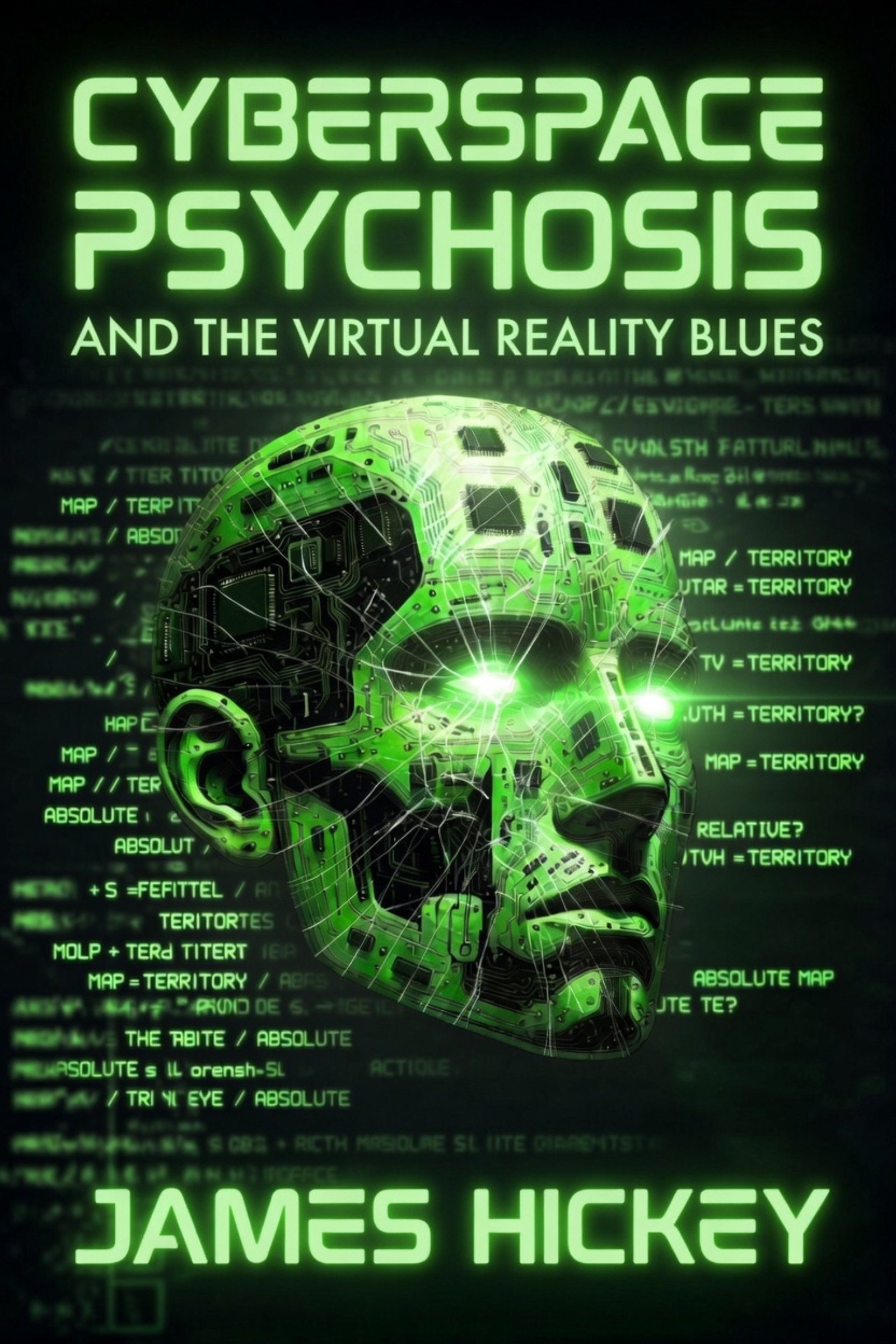
Available now in digital. Print editions coming soon.
Cyberspace Psychosis and the Virtual Reality Blues is an exercise in Applied Neurodivergence, using pattern seeking through the lens of Alfred Korzybski's map is not the territory to dissect the effect cyberspace has had on Western life. Across thirteen movements, the book traces that effect through the systems where the damage shows up most clearly: the media, money, personal connection, mental health, AI, the credential crisis, and the strange new business of selling us back to ourselves. The argument is that we have spent the last two decades mistaking the map for the place, and that most of what we now call confusion, outrage, loneliness, and political derangement is the predictable result of a culture that confused its representations with the things they were supposed to represent. Once that frame is in place, a lot of contemporary madness stops looking like a mystery and starts looking like a system working exactly as designed.
James writes as what he calls an infected participant, someone inside the same systems he's critiquing, scrolling the same feeds, fighting the same compulsions, watching the same friends lose the plot. The voice moves between rigorous and conversational on purpose, with the body text written in a register that meets the reader where they actually live and the endnotes built out in full Chicago format for anyone who wants to follow the receipts. It's a book for readers who already suspect something is wrong but can't name it cleanly, who have noticed that the maps keep getting louder while the territory keeps getting harder to find, and who want a framework sharp enough to hold the weight of what they are seeing. None of us are getting out of this clean. The book doesn't pretend otherwise. What it offers instead is a way to see the machine you're inside of without flinching, and a vocabulary for talking about it that doesn't collapse into the usual scripts.
About the Author
James Hickey is a writer and publisher based in Northeast Ohio, working at the intersection of neurodivergence, cultural analysis, and pattern recognition. His Applied Neurodivergence work, available in the Publications section of this site, treats neurodivergent cognition as a methodology rather than a deficit, and Cyberspace Psychosis and the Virtual Reality Blues is the long-form extension of that project. He writes from inside the systems he's looking at, not above them, and he's been wrong about enough things to be useful on the subject of how confusion actually works.